Milloin olet viimeksi toivonut olevasi joku muu, tai muunlainen? Olevasi jossain muualla, tekeväsi jotain toista työtä, opiskelevasi jotain toista alaa, puhuvasi toista kieltä? Oletko joskus toivonut eläväsi toisessa, erilaisessa ajassa tai kulttuurissa? Oletko koskaan ajatellut, että elämäsi on harmaata ja ankeaa ja toivonut siihen nopeaa, radikaalia muutosta?
Äskeisestä sarjasta kysymyksiä löytyy luultavasti lähes jokaiselle ainakin yksi kohta, johon voi vastata kyllä: suurin osa mesitä on kuitenkin elänyt teini-iän tiimellyksessä, jolloin mikään ei oikein kelpaa. Koska on kuitenkin mahdollista, että joku vastaa jokaiseen kysymykseen "ei", tässä on toinen sarja kysymyksiä.
Oletko koskaan lukenut fiktiivistä kirjaa, novellia, kertomusta, tai sarjakuvaa? Oletko koskaan kuunnellut tai kertonut tarinoita tai juttuja? Oletko koskaan pelannut peliä tai leikkinyt leikkiä, jossa olet ottanut jonkun toisen roolin?
Kaikki äsken kysymäni kysymykset mahtuvat yhden kattotermin alle. Kyseessä on eskapismi. Aikuisia, jotka pelaavat tietokonepelejä, pilkataan usein, koska hei eivät "osaa kasvaa irti lapsuuden leikeistään". Samalla "tavallisten" aikuisten keskuudessa burnoutit, downshiftaaminen, masennus ja kaikki muut loppuunpalamisen ongelmat rehottavat voimakkaampina kuin koskaan.
Vaihtoehdot laskevat ihmisen onnellisuutta. Jos kaupassa on tarjolla vain yhtä virvoitusjuomaa, juo sitä onnellisempana, kuin jos valitsee kymmenestä tai viidestäkymmenestä vaihtoehdosta yhden. Nykyaika tarjoaa jatkuvasti enemmän vaihtoehtoja, joka aiheuttaa ihmisille ahdistusta: entä jos valitsen väärin?
Pelaaminen, lukeminen, leikkiminen, tarinankerronta, oman roolin asettaminen syrjään hetkiseksi, jonkun toisen saappaisiin astuminen vähentää todistettavasti tätä stressiä ja ahdistusta. Jonkin toisen roolin omaksuminen antaa perspektiiviä, mahdollisuuden asettua itsensä ulkopuolelle, aivan uudenlaisen reflektion keinon. Tehkää siis jotain, joka heittää teidät pois tutusta ympäristöstänne. Lukekaa fiktiota, astukaa Paul Atreidesin (Dyyni), Aylan (Maan lapset), Elizabeth Bennetin (Ylpeys ja ennakkoluulo), Adam Jensenin (Deus Ex: the Human Revolution) tai the Kidin (Bastion) kenkiin ja käykää jossain aivan muualla. Jos mikään ennalta luotu maailma ei tunnu hyvältä, tehkää omanne. Larpatkaa, cossatkaa, ropettakaa, tehkää teatteriharjoituksia tai käykää tulkitsevan nykytanssin kurssi. Tehkää jotain, jossa olette joku muu. Se on kaiken päälle vielä hauskaakin!

This work is licensed under a Creative Commons Attribution Non-commercial International 4.0 Unported License.
keskiviikko 18. heinäkuuta 2012

keskiviikko 11. heinäkuuta 2012
Untargeted Prayers
What I think of as the inherently western way of prayer that is practiced especially by monoteistic religions has always seemed somewhat backwards to me. Most "western" religions, especially the three big ones (Christianity, Muslim and Judaism) have for a very long time had a system of targeted, specific prayers: even more specifically, asking prayers. Most prayers have been targeted at something that the person praying wants to gain or wishes to give thanks for.
The three religions that I mentioned are not the only ones that do or have done this: old mediterranean religions had an even more specific system of doing these kind of prayers: each specific aspect of day-to-day life and affairs had a specific deity that the prayers (and offerings) were targeted at. Simply by calling upon a given deity you had targeted a specific aspect of life. Every prayer was a plea of sorts: if one asked for something, one was asking for enbetterment of the situation at hand, and if one was giving thanks for something "given", it was at the same time an unvocalized plea of stasis or further gain.
What I have now taken to calling the western faith system works rather backwards to me: you ask for right about everything, and when something good happens, you give thanks. If something bad happens, you do penance to make sure you won't be prosecuted by a celestial punitive force further. The three big religions of today all underline free will and personal choice, and yet everything that happens is immediately related to the system of faith and belief. Nothing happens without a celestial hand taking part in the proceedings.
As something of an agnostic myself, I find the system of targeted pleas to an unseen entity in hope of forgiveness or gain odd. It struck me as odd even when I was a kid, when the evening prayers were specific pleas of something, even if it was only "pray my soul to keep". This brings me to the namesake of today's rambling: untargeted prayers.
In some eastern belief systems, especially in Buddhism, there is no celestial entity from whom to ask much anything. Instead, the prayer system is untargeted: the prayers are targeted more at the inner self and maybe the universe: a meditative way of giving form and focus to the self that might have been previously missing. Here one could argue that there is such a prayer in Christianity as well: the ever-classic plea for world please, or for grace and goodness for others. This isn't the same, however, because the prayer is still targeted. While the plea is universal, it is asked from a single, specific entity.
The point I think I'm trying to make is that a system where all the thoughts and collective prayers focus on asking something from an entity gives the need for action away from the individual. When you pray for something better from a god, you can stop trying to enbetter the situtation yourself. If you hope and believe that someone else might do something instead of you if you just ask hard enough, you don't need to try to do anything personally. This is the only real problem I have with religious piety: if you simply believe that god will do something instead of you, you don't need to do it yourself.
The three religions that I mentioned are not the only ones that do or have done this: old mediterranean religions had an even more specific system of doing these kind of prayers: each specific aspect of day-to-day life and affairs had a specific deity that the prayers (and offerings) were targeted at. Simply by calling upon a given deity you had targeted a specific aspect of life. Every prayer was a plea of sorts: if one asked for something, one was asking for enbetterment of the situation at hand, and if one was giving thanks for something "given", it was at the same time an unvocalized plea of stasis or further gain.
What I have now taken to calling the western faith system works rather backwards to me: you ask for right about everything, and when something good happens, you give thanks. If something bad happens, you do penance to make sure you won't be prosecuted by a celestial punitive force further. The three big religions of today all underline free will and personal choice, and yet everything that happens is immediately related to the system of faith and belief. Nothing happens without a celestial hand taking part in the proceedings.
As something of an agnostic myself, I find the system of targeted pleas to an unseen entity in hope of forgiveness or gain odd. It struck me as odd even when I was a kid, when the evening prayers were specific pleas of something, even if it was only "pray my soul to keep". This brings me to the namesake of today's rambling: untargeted prayers.
In some eastern belief systems, especially in Buddhism, there is no celestial entity from whom to ask much anything. Instead, the prayer system is untargeted: the prayers are targeted more at the inner self and maybe the universe: a meditative way of giving form and focus to the self that might have been previously missing. Here one could argue that there is such a prayer in Christianity as well: the ever-classic plea for world please, or for grace and goodness for others. This isn't the same, however, because the prayer is still targeted. While the plea is universal, it is asked from a single, specific entity.
The point I think I'm trying to make is that a system where all the thoughts and collective prayers focus on asking something from an entity gives the need for action away from the individual. When you pray for something better from a god, you can stop trying to enbetter the situtation yourself. If you hope and believe that someone else might do something instead of you if you just ask hard enough, you don't need to try to do anything personally. This is the only real problem I have with religious piety: if you simply believe that god will do something instead of you, you don't need to do it yourself.
torstai 28. kesäkuuta 2012
Sleepless nights
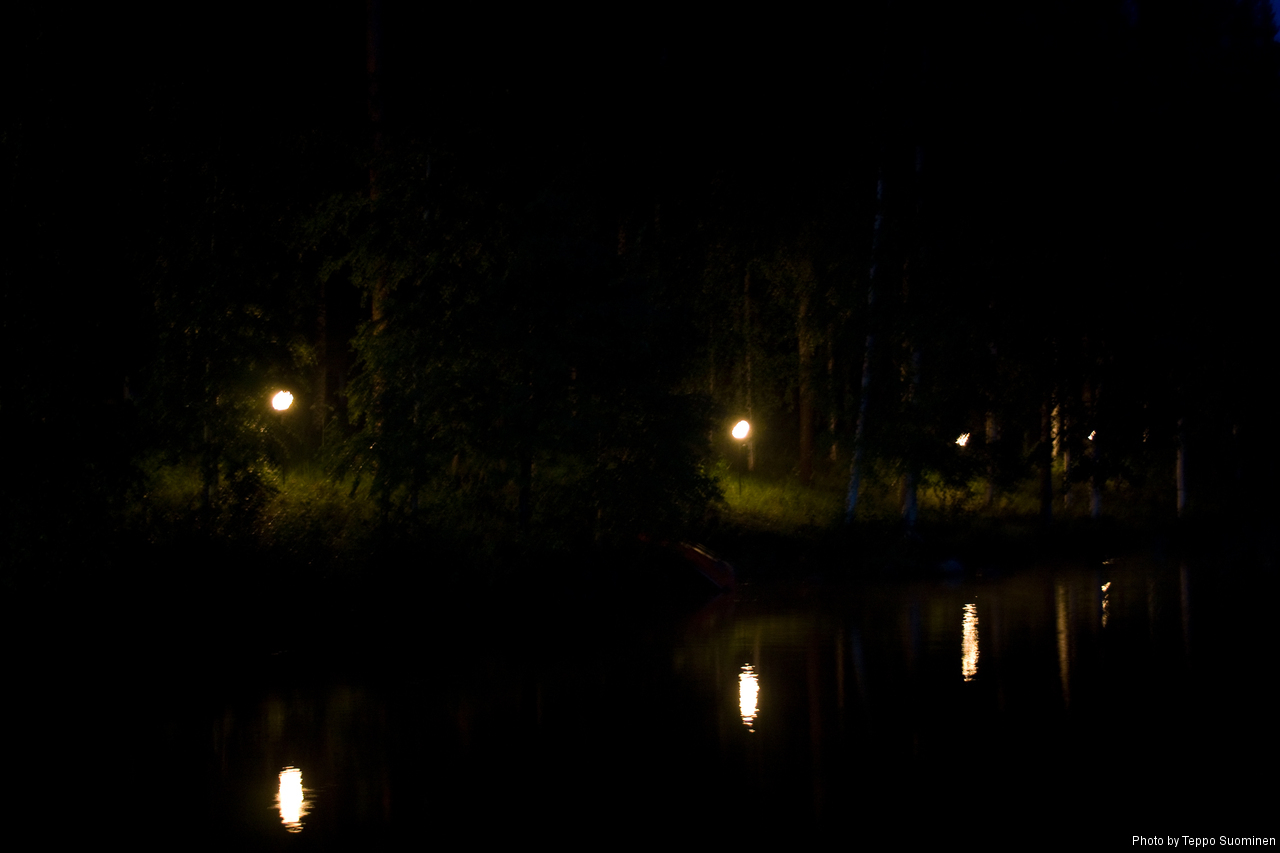
Well, we've passed the light peak of the year, and now the days will get only darker. I like the dark nights, they give me the time and space to think and breathe. So put on some Eddie Vedder, shut the lights, grab a bottle or glass or bowl of whatever you want to drink, sit down and cool off. Take some time for yourself to see, even in the dark. Here's a little something to see you through.




perjantai 22. kesäkuuta 2012
And a supersticious solstice to all!
There are two days in a year when a big part of the world gets the itch to light humongous piles of wood and debris on fire. Now every Finn reading this will go "Midsummer whoooooo!" and dash to the car to drive to the summer cabin. Of course, only a rare few Finns will read this before midsummer's already long gone, because most of them are already at the cabins.
Midsummer is indeed the first date to light the fires, which - if you discount it being awesome - seems a bit foolish: it's, especially in Finland, the day when the sun almost (or literally) never sets. And yet we feel the unquenchable urge to put huge bonfires to the torch. The second date for lighting the fires happens, would you have it, on another solstice: the winter solstice.
These dates are, on the calendar, as far from each other as you can get two days to be, and are otherwise diametrically opposed as well, the summer solstice marking the highest point of the sun, the longest day of the year, and the winter solstice being the exact opposite of this. The supersticions surrounding these two days are, however, very specifically linked, especially when it comes to the bonfires.
The human penchant for pyromania on these two specific dates comes from old, old supersticion. Nowadays christianity and before that every other "pagan" belief has nicked the day from the previous one, dating back as far as we might care to follow. Somehow fire has been a symbol of protection and safety, for the belief behind these blazing fires seem to be that evil spirits are disheartened and driven off by the flames.
These two days have been chosen because the loss of light has been viewed as the time for these evil beings. The summer and winter solstice mark the two days that act as kind of lodestones to the whole thing. On midsummer, as the light begins to fade, the malign spirits are strong as their power begins to rise anew, whereas midwinter finds them at the peak of their power and the fires must be burned to drive them off.
These are not the only supersticions that have survived to our day surrounding midsummer: healing herbs, cantrip spells and divination are all things that are closely linked to midsummer in our folklore. I'm not going to delve into those here, or I'll be writing this still when midsummer's already long past. Here are some sights from last year's midsummer, may it be as pretty this time around. A supersticious solstice to all!


Midsummer is indeed the first date to light the fires, which - if you discount it being awesome - seems a bit foolish: it's, especially in Finland, the day when the sun almost (or literally) never sets. And yet we feel the unquenchable urge to put huge bonfires to the torch. The second date for lighting the fires happens, would you have it, on another solstice: the winter solstice.
These dates are, on the calendar, as far from each other as you can get two days to be, and are otherwise diametrically opposed as well, the summer solstice marking the highest point of the sun, the longest day of the year, and the winter solstice being the exact opposite of this. The supersticions surrounding these two days are, however, very specifically linked, especially when it comes to the bonfires.
The human penchant for pyromania on these two specific dates comes from old, old supersticion. Nowadays christianity and before that every other "pagan" belief has nicked the day from the previous one, dating back as far as we might care to follow. Somehow fire has been a symbol of protection and safety, for the belief behind these blazing fires seem to be that evil spirits are disheartened and driven off by the flames.
These two days have been chosen because the loss of light has been viewed as the time for these evil beings. The summer and winter solstice mark the two days that act as kind of lodestones to the whole thing. On midsummer, as the light begins to fade, the malign spirits are strong as their power begins to rise anew, whereas midwinter finds them at the peak of their power and the fires must be burned to drive them off.
These are not the only supersticions that have survived to our day surrounding midsummer: healing herbs, cantrip spells and divination are all things that are closely linked to midsummer in our folklore. I'm not going to delve into those here, or I'll be writing this still when midsummer's already long past. Here are some sights from last year's midsummer, may it be as pretty this time around. A supersticious solstice to all!


maanantai 18. kesäkuuta 2012
A real-life comicbook supervillain!
I try to keep off anything topical on the internet here, because I am well aware that people often have rather specific opinions when it comes to things that are on the wall at the time. This time, however, such inaction is not an option. This is a time to hoist the colors and do some banner-waving.
For those of you who don't follow online comics or the news circulating around them, FunnyJunk.com (a page that lives on contributed content, also known as leeching off everyone else) hired a lawyer, Charles Carreon, who sued Oatmeal.com for, uh, defamation and false advertising (the false advertising tag, atleast, is false, because Google doesn't work the way they seem to think it does). They wanted 20 000$ for this little hoot, so Matthew Inman (the man behind the Oatmeal) went ahead and raised almost 10 times that amount in an online fundraiser and gave it to National Wildlife Foundation and American Cancer Society. The fundraiser is still on, if you feel like pitching in, by the way: the Bear Love Good, Cancer Bad -campaign.
Now, there's been some name calling and some such on both sides, but FunnyJunk and specifically Mr. Carreon are finding out what exactly the Streisand Effect is all about (in short and in this context, the internet always hits you back with greater volume). Charles Carreon, however, rose to a whole new, comicbook-supervillain-kind-of an infamy on last friday, when he, privately, sued the Oatmeal, IndieGoGo (the company behind the fundraiser) and also the National Wildlife Foundation and the American Cancer Society. Now, the complaint isn't available yet so no one (except the Dr. Doom behind this little escapade of idiotism) knows the reasoning behind sueing the two beneficaries of the fundraiser. I'm sure in his personal universe, it makes a lot of sense.
I'm talking about this because everyone should. We should show that this kind of megalomanic censorship and butthurt crazy. I'm not an expert, so read it from the horse's mouth, and even more preferrably, an expert. Even more importantly, spread the word, donate money, help in any way you can.
For those of you who don't follow online comics or the news circulating around them, FunnyJunk.com (a page that lives on contributed content, also known as leeching off everyone else) hired a lawyer, Charles Carreon, who sued Oatmeal.com for, uh, defamation and false advertising (the false advertising tag, atleast, is false, because Google doesn't work the way they seem to think it does). They wanted 20 000$ for this little hoot, so Matthew Inman (the man behind the Oatmeal) went ahead and raised almost 10 times that amount in an online fundraiser and gave it to National Wildlife Foundation and American Cancer Society. The fundraiser is still on, if you feel like pitching in, by the way: the Bear Love Good, Cancer Bad -campaign.
Now, there's been some name calling and some such on both sides, but FunnyJunk and specifically Mr. Carreon are finding out what exactly the Streisand Effect is all about (in short and in this context, the internet always hits you back with greater volume). Charles Carreon, however, rose to a whole new, comicbook-supervillain-kind-of an infamy on last friday, when he, privately, sued the Oatmeal, IndieGoGo (the company behind the fundraiser) and also the National Wildlife Foundation and the American Cancer Society. Now, the complaint isn't available yet so no one (except the Dr. Doom behind this little escapade of idiotism) knows the reasoning behind sueing the two beneficaries of the fundraiser. I'm sure in his personal universe, it makes a lot of sense.
I'm talking about this because everyone should. We should show that this kind of megalomanic censorship and butthurt crazy. I'm not an expert, so read it from the horse's mouth, and even more preferrably, an expert. Even more importantly, spread the word, donate money, help in any way you can.
sunnuntai 17. kesäkuuta 2012
Time
This thought has been baking for almost a week now, ever since I saw the movie The Man From Earth. I recommend this movie to everybody, everywhere, ever. It's a really, really good movie that, at least to me, as a viewer, forced some hard questions. It came out in 2007, so it should be pretty easy to find a copy, too. It's a movie about a man who tells his friends he's 14 000 years old. To tell more would spoil the surprises. Watch it.
We're going to step outside the bounds of everyday reality now and do a bit of a thought exercise. Create a world, just like ours, and put yourself in it. Now, for yourself, create a friend. I believe it would work better if this friend would be an adult, but it's not a must. Your friend you've made here is a real friend, a true persona that you genuinely like. Your friend, after you've known him for a few years, seems like one of those ageless people: his/her looks might change, but you can't really tell what age he/she is, or see any real signs of aging.
After you've known for a score of years, you start to become certain: your friend doesn't age, or atleast doesn't seem to. You grow older, while he/she seems to, atleast outwardly, stay the same age. Maybe ten, or twenty years from the day you met, your friend seems the same as ever, fit as a fiddle, still as ageless as the day you met, while for you time marches ever onwards. Would you believe the evidence of your own eyes or discard it as a mere curiosity? What if your friend confirmed it? Could you not be envious? Could you keep the cold touch of enmity and the feeling of unfairness from affecting your relationship, knowing that while you grow older and will eventually die your friend will forever stay the same? If you couldn't, would you wish for your friend to not have this ability or would you wish you had the same trait? Would you wish it only for yourself, or for both of you?
Now imagine, if you can, yourself ageless. Seasons, decades and centuries pass and you flow through it all like water in a stream. How would it change you, to see time pass you by? Everyone you know leaves this world in what might, after a while, seem like quite the hurry, while you are outwardly ever the same. How could you keep yourself from jading, from simply stopping to care? Or would you view yourself as apart, different enough to not be forced to care at all? Would you have to, to be able to hold on to sanity? Or would you lapse into inaction or reclusion, unable or unwilling to act in a world that passes you by? Would you try to change things, make a difference, given all the time in the world?
The philosopher in me thinks these questions important. However, I find myself unable to give a satisfying answer to any of these questions: I can simply wonder and make assumptions, play little games in my mind where I act one way or the other. As often happens with such palaces of thought, I am not certain of how things would turn out in reality. I create differentiating "truths", a juxtaposition, and try to create an absolute. This is where I fail: second guessing comes to me by nature. There is no perfect stance, no given answer simple enough to encompass it all. This complexity of thought leaves me a bit rattled at times, but the grey between white and black is probably better than either absolute.
It seems I digress: the sleeplessness of too hot summer nights makes my mind run in circles. Thus, in closure, if I should give a reason to the barrage of questions arrayed here, I suppose it would be relativity to other humans. How would you relate - how could you relate - if there was a dividing factor so pervasive as to affect every aspect of the whole? As I, rather spaciously, pointed out in the previous paragraph, I don't know. This, to me, makes the question ever more interesting. A question you already have an answer for does little to grow you as a person.
We're going to step outside the bounds of everyday reality now and do a bit of a thought exercise. Create a world, just like ours, and put yourself in it. Now, for yourself, create a friend. I believe it would work better if this friend would be an adult, but it's not a must. Your friend you've made here is a real friend, a true persona that you genuinely like. Your friend, after you've known him for a few years, seems like one of those ageless people: his/her looks might change, but you can't really tell what age he/she is, or see any real signs of aging.
After you've known for a score of years, you start to become certain: your friend doesn't age, or atleast doesn't seem to. You grow older, while he/she seems to, atleast outwardly, stay the same age. Maybe ten, or twenty years from the day you met, your friend seems the same as ever, fit as a fiddle, still as ageless as the day you met, while for you time marches ever onwards. Would you believe the evidence of your own eyes or discard it as a mere curiosity? What if your friend confirmed it? Could you not be envious? Could you keep the cold touch of enmity and the feeling of unfairness from affecting your relationship, knowing that while you grow older and will eventually die your friend will forever stay the same? If you couldn't, would you wish for your friend to not have this ability or would you wish you had the same trait? Would you wish it only for yourself, or for both of you?
Now imagine, if you can, yourself ageless. Seasons, decades and centuries pass and you flow through it all like water in a stream. How would it change you, to see time pass you by? Everyone you know leaves this world in what might, after a while, seem like quite the hurry, while you are outwardly ever the same. How could you keep yourself from jading, from simply stopping to care? Or would you view yourself as apart, different enough to not be forced to care at all? Would you have to, to be able to hold on to sanity? Or would you lapse into inaction or reclusion, unable or unwilling to act in a world that passes you by? Would you try to change things, make a difference, given all the time in the world?
The philosopher in me thinks these questions important. However, I find myself unable to give a satisfying answer to any of these questions: I can simply wonder and make assumptions, play little games in my mind where I act one way or the other. As often happens with such palaces of thought, I am not certain of how things would turn out in reality. I create differentiating "truths", a juxtaposition, and try to create an absolute. This is where I fail: second guessing comes to me by nature. There is no perfect stance, no given answer simple enough to encompass it all. This complexity of thought leaves me a bit rattled at times, but the grey between white and black is probably better than either absolute.
It seems I digress: the sleeplessness of too hot summer nights makes my mind run in circles. Thus, in closure, if I should give a reason to the barrage of questions arrayed here, I suppose it would be relativity to other humans. How would you relate - how could you relate - if there was a dividing factor so pervasive as to affect every aspect of the whole? As I, rather spaciously, pointed out in the previous paragraph, I don't know. This, to me, makes the question ever more interesting. A question you already have an answer for does little to grow you as a person.
tiistai 12. kesäkuuta 2012
Stranger's Prayer
This prayer is not fully from my pen, but I have modified it somewhat to fit what seemed to me the aestethic prosadic form. As for where it's from, it is an amalgam of collected conversations, thoughts and correspondences. And that's all the preptalk I'll give it today.

Stranger's Prayer
Your face is unknown to me
And this place is new
So let me show as much kindness
As is in my heart
For I may not pass this way again

Tilaa:
Blogitekstit (Atom)